
Blueprint Printing Done Properly: Get Your Plans Job-Site Ready
A blueprint can look perfectly clear on a computer screen and still become difficult to work with once it reaches the people responsible for the project. Detailed notes need to remain easy to follow, different sections of the drawing need to be understood quickly, and most importantly, everyone needs to be working from the correct version. When plans are being used by contractors, architects, engineers and project managers, small mistakes in the printing process can create unnecessary confusion.
That is why blueprint printing should not be treated as simply sending a PDF to a printer. The quality and usefulness of the finished plans depend on what happens before the file is submitted, how the drawing set has been organized and how the printed copies will actually be used.
For businesses working with construction documents and technical drawings, getting those details right can make printed plans a much more practical part of the project.
Why Blueprint Printing Still Has a Place in Modern Projects
Construction, architecture and engineering workflows have become increasingly digital. Plans can be emailed, stored in shared project folders and reviewed from computers or mobile devices. That convenience has changed the way project information moves between teams, but it has not eliminated the usefulness of a physical drawing.
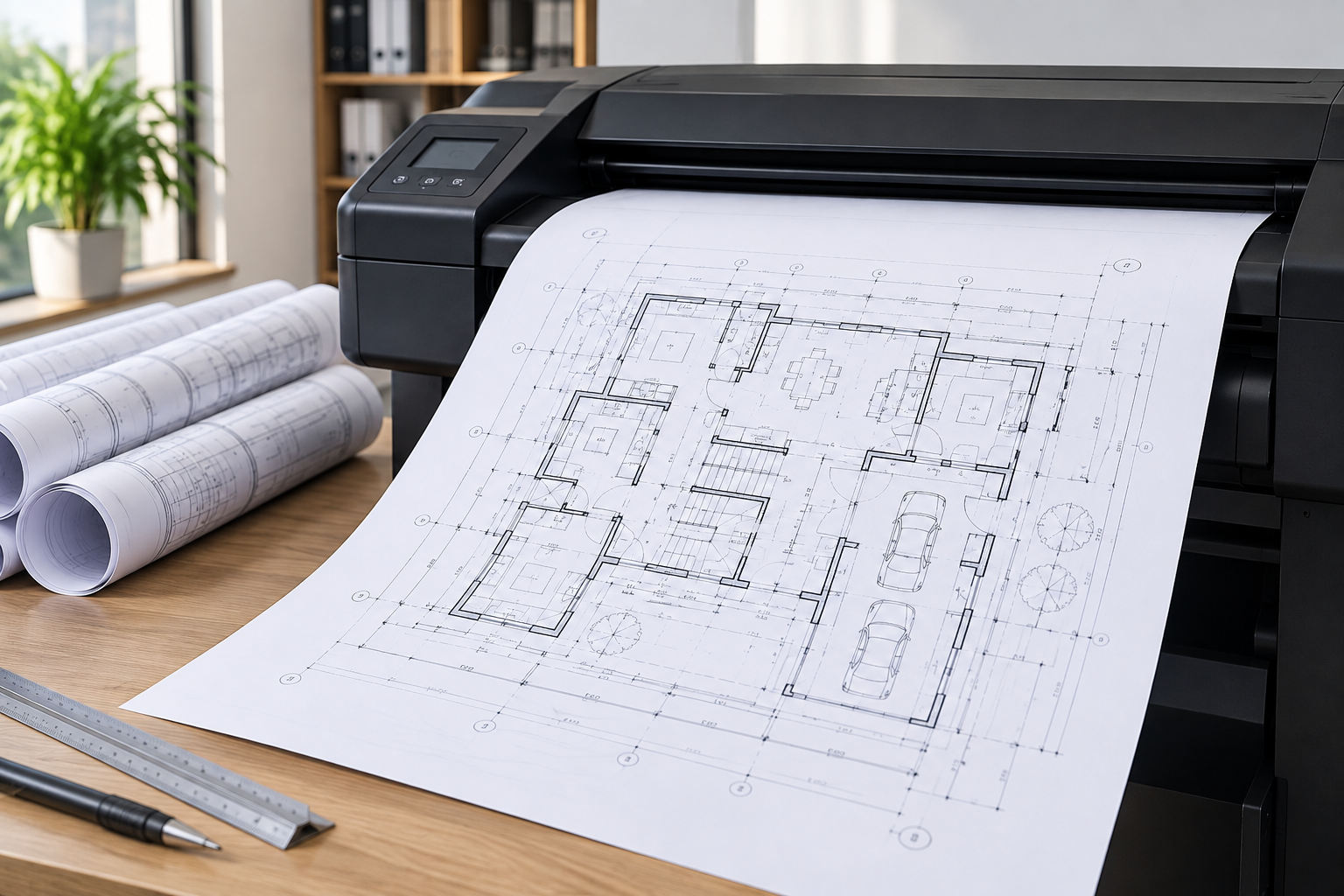
Printed blueprints provide a different way to work with project information. A contractor can spread a drawing across a table during a meeting, a project manager can reference a plan while discussing work with different trades, and several people can review the same area without passing a device around or repeatedly zooming in and out of a PDF.
The point is not that printed plans are better than digital plans in every situation. Most businesses benefit from using both. Digital files are useful for distribution, revisions and recordkeeping, while printed plans can be more practical when teams need a physical working reference.
What Good Blueprint Printing Should Accomplish
The most important job of a printed blueprint is to make the drawing usable. Technical plans can contain dimensions, notes, symbols, callouts and detailed line work that people need to interpret correctly. If the finished document makes those elements difficult to follow, the plan becomes less useful regardless of how good the original drawing was.
This is why businesses should think about the final use of a drawing rather than viewing printing as the last administrative step in the process. A plan intended for a contractor meeting may be handled differently from one being kept as an internal project reference. A drawing being shared among several project stakeholders may require multiple copies, while another project may need only a limited number of physical sets alongside the digital files.
Professional blueprint printing helps businesses move technical drawings from the digital environment into a physical format that can be used where the project actually happens.
Many Blueprint Problems Begin Before Printing
When something goes wrong with a printed plan, the printer is not always where the problem started. Construction and design teams often work under tight deadlines, and project files may pass between several people before reaching the printing stage. That creates plenty of opportunities for an outdated drawing, incomplete set or incorrectly exported file to slip through.
A project folder may contain several versions of what appears to be the same plan. One file may include a recent revision while another still contains an older layout. Pages created by different members of the project team may also be combined into a single drawing package without anyone reviewing the complete set.
Taking a few minutes to inspect the actual file before submitting it can prevent many of these issues. Businesses should open the final document, move through the pages, check that the required drawings are present and make sure the file being submitted is genuinely the version the project team intends to use.
Revision Control Deserves More Attention
Few things create confusion faster than having different versions of the same drawing circulating around a project. A design can change several times as approvals are received, dimensions are updated or project requirements evolve. If an older version remains in circulation after a new revision has been issued, people can easily end up referencing different information.
This makes revision control one of the most important steps before ordering blueprints. Clear file naming, identifiable revision information and a final review of the drawing package can help businesses reduce the chance of sending outdated plans into production.
It is also useful to think about what happens to existing printed copies after a revision. Printing excessive quantities can make version control more difficult because old sets may remain on desks, in vehicles or around the project long after updated drawings have been distributed. Matching print quantities to the people who genuinely need physical copies can make revisions easier to manage.
Treat the Drawings as a Complete Set
Technical plans rarely consist of one isolated sheet. Construction and commercial projects may involve several drawings that belong together, sometimes supplied by different architects, engineers, consultants or contractors.
Before submitting a drawing package, businesses should review the set as a whole. Check that the necessary sheets are included, confirm that pages have not accidentally been duplicated and make sure older drawings have not remained in the package. The order of the pages should also make sense for the people who will eventually use them.
This becomes particularly important when documents have been assembled from several sources. One person may assume another team member has already checked the package, and the mistake may not become obvious until the physical plans are being reviewed. A final look at the complete set creates an opportunity to catch those problems before printing.
Choose the Print Quantity Around the Project
There is no reason every blueprint order needs the same number of copies. The right quantity depends on the way the project team works.
A construction project involving several contractors may require multiple working sets. A smaller renovation could need only a few physical copies for the project manager and contractor. An architectural review may require printed plans primarily for a meeting, while the rest of the project communication continues digitally.
Thinking about the people who actually need a physical copy helps businesses avoid unnecessary printing. It can also reduce the number of outdated plans that need to be replaced when the next revision arrives.
The objective should be to have enough printed plans available for the people who will genuinely use them, rather than printing additional sets simply because that has always been the routine.
Do Not Make Blueprint Printing a Last-Minute Task
Blueprint printing often becomes urgent because it sits near the end of a much longer project process. Drawings are revised, approvals take longer than expected, a contractor meeting gets moved forward and suddenly the physical plans are needed immediately.
Working under that kind of pressure makes simple mistakes easier to miss. Someone may submit the wrong file because there is no time for a final review, forget a page in the drawing package or order the wrong number of sets.
Building printing into the project schedule gives teams time to confirm exactly what is being produced. Even a short review window can help ensure that the latest drawing set is being used and that the quantity matches the actual project requirement.
The goal is not simply to get something printed as quickly as possible. It is to have the right drawings available when the people working on the project need them.
What to Check Before Sending Blueprints to Print
A good pre-print check does not need to become another complicated project procedure. Start by confirming the project name and opening the exact file that will be submitted. Review the revision information, page order and orientation, and move through the complete document to make sure nothing appears to be missing.
If drawings have been received from multiple people, pay particular attention to whether all of the pages belong to the same current project set. Similar filenames can make older documents easy to overlook, especially when project folders contain several rounds of revisions.
It is also worth confirming the number of printed sets before placing the order. Knowing who needs a copy and how those plans will be used makes it easier to choose a sensible quantity rather than making an assumption at the last minute.
Why Professional Blueprint Printing Makes Business Sense
Office printers are useful for everyday documents and quick internal checks, but technical plans can create a very different printing requirement. When employees have to spend time dealing with printer settings, organizing pages or troubleshooting equipment, a task that should support the project begins taking attention away from it.
Using a dedicated blueprint printing service gives contractors, architects, engineering teams and other businesses a more straightforward route from project file to physical plan. Instead of turning printing into another internal responsibility, the team can concentrate on preparing the correct drawings and getting them into the hands of the people who need them.
That is particularly valuable when plans are part of an active business project. The purpose of the printed document is not simply to exist on paper. It needs to be ready to support meetings, discussions, planning and work in the real world.
Get the Plans Right Before They Reach the Project
Blueprint printing may appear to be one of the simplest stages of a construction or technical project, but the usefulness of the finished plans depends heavily on the preparation behind them. The correct revision needs to be selected, the drawing set needs to be complete, the quantity should reflect the way the project team works, and the files should be reviewed before they are submitted.
Digital drawings will continue to be an essential part of modern project workflows, but there are still many situations where having a physical plan in front of the team makes communication and reference more practical.
For contractors, architects, engineers and other businesses that need project drawings in physical form, Blueprint Printing from The Complete Package provides a practical way to take plans from the screen and put them where the work is happening.