Folding Brochure Printing for Business: A Practical Marketing Guide
For businesses that need more room than a flyer but do not need a full booklet, a professionally printed folding brochure can fill an important gap.
Brochures give businesses space to introduce their company, organize services, highlight products, explain an offer, and give prospects something tangible to take with them. They work especially well when a sales conversation cannot happen entirely on a website or in a single advertisement.
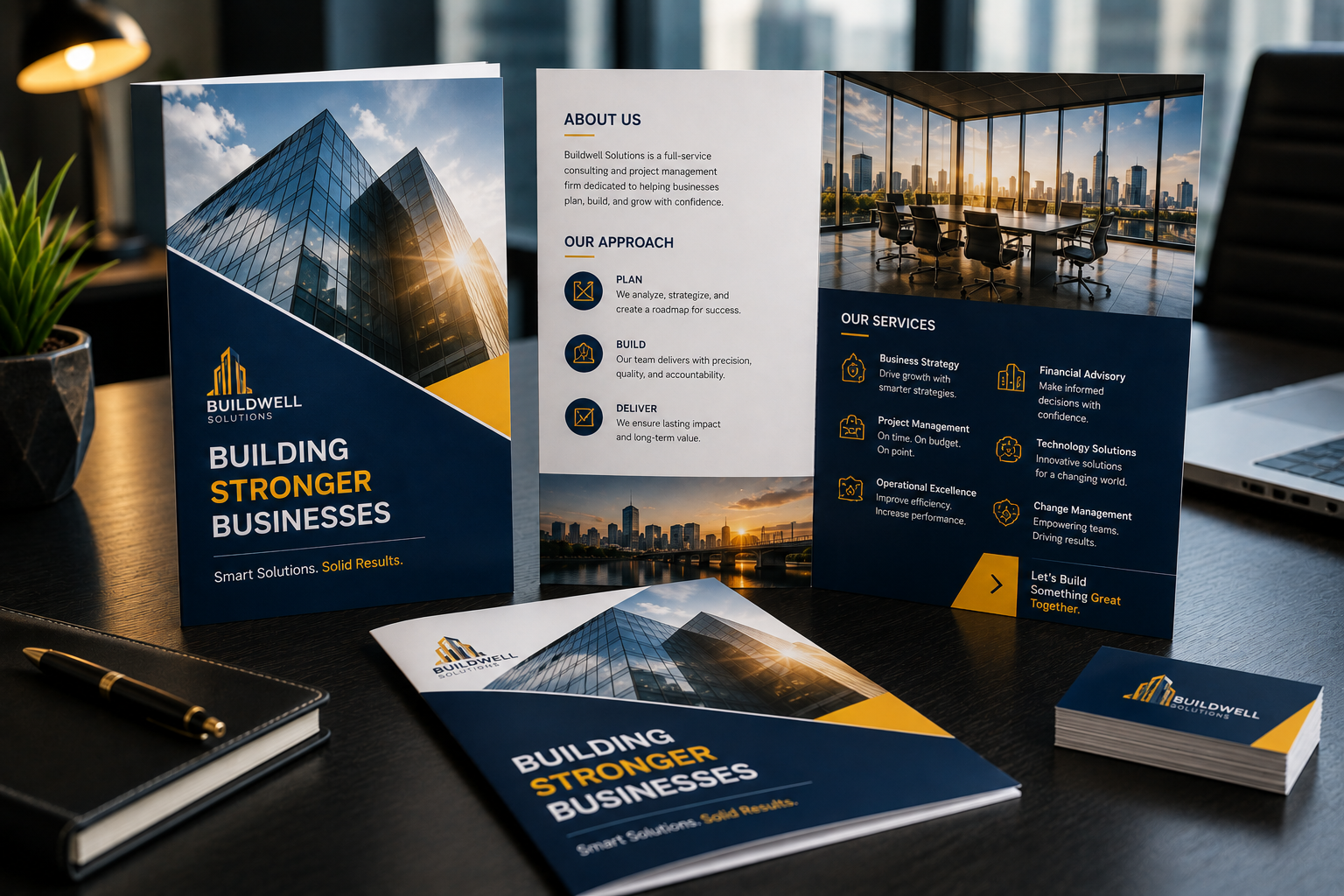
The Premium 100lb Folding Brochure Printing option from The Complete Package provides businesses with an 11" x 17" brochure folded to 8.5" x 11", creating a professional format for presenting more information without moving into a multi-page booklet.
TL;DR
Folding brochures give businesses more room to communicate than standard flyers or postcards.
The 11" x 17" format folds to a convenient 8.5" x 11" finished size.
100lb paper gives the brochure a more substantial, professional presentation.
Brochures can support sales meetings, trade shows, real estate marketing, service presentations, product introductions, and other business campaigns.
The format works best when information is organized around a clear business objective rather than trying to fit every detail about the company into one piece.
Why Folding Brochures Still Matter for Businesses
Digital marketing can generate the first click, call, or inquiry, but businesses often need something more substantial when a prospect begins evaluating what they offer.
That is where printed brochures continue to be useful.
A brochure can move from a sales representative's hand to a prospect's desk, from a trade show booth into an attendee's bag, or from a business counter into a customer's hands.
Unlike a single-page advertisement, a folding brochure also gives businesses room to build a logical presentation.
One section can introduce the company. Another can explain services. Additional space can highlight benefits, products, processes, locations, or contact information.
Instead of forcing the entire message onto one side of a flyer, businesses can use the folds to create a natural progression through the information.
Who Is This Type of Brochure For?
Folding brochures can work across a wide range of B2B and local business environments.
They can be particularly useful for service companies, real estate professionals, contractors, healthcare businesses, schools, manufacturers, professional firms, local retailers, hospitality businesses, and organizations attending conferences or trade shows.
The deciding factor is not necessarily the industry.
It is how much information needs to be communicated.
If your business needs enough space to explain an offer or company clearly, but a multi-page catalog or booklet would be excessive, a folding brochure can provide the middle ground.
What to Look for in Business Brochure Printing
A Format That Gives Your Message Enough Room
One of the biggest advantages of an 11" x 17" folding brochure is the available design space.
The larger flat sheet provides room for stronger visual hierarchy, photography, service information, company messaging, and calls to action. Once folded to 8.5" x 11", it becomes a more manageable piece for distribution and presentation.
That balance makes the format useful when a standard flyer feels too limited.
Paper That Supports a Professional Presentation
The physical feel of printed marketing matters, especially when the brochure represents your company during a sales conversation or first introduction.
The Complete Package's 11" x 17" folding brochure uses 100lb paper, giving businesses a more substantial format for customer-facing marketing.
For a brochure being handed to prospects, displayed at an event, or included with other business materials, the paper is part of the presentation.
A Layout Built Around the Fold
A folding brochure should not simply be treated like a large flyer with a crease in the middle.
The fold should help organize the story.
For example, the front can establish the main message or offer. Interior sections can explain services, advantages, processes, or product categories. The final section can provide the next step, contact details, or call to action.
When the design follows the way someone naturally opens and reads the brochure, a larger amount of information becomes easier to understand.
Consistent Business Branding
Brochures are often used alongside business cards, presentation folders, banners, signs, websites, and digital advertising.
Keeping the same logo treatment, typography, photography style, colors, and core message helps the brochure feel like part of the same business rather than an isolated marketing piece.
That consistency becomes especially important for businesses using brochures in sales presentations, networking events, conferences, and client meetings.
Where Businesses Can Use Folding Brochures
Sales Meetings and Client Presentations
A brochure can give sales teams a physical leave-behind after a meeting.
Instead of expecting a prospect to remember every service or benefit discussed, businesses can organize the most important information into a piece the prospect can review later.
For companies with several services, the brochure can also help sales representatives keep the presentation focused and consistent.
Trade Shows and Business Events
Trade show conversations are often short.
Visitors may speak with several companies within an hour, making it difficult to remember every detail afterward.
A professionally printed brochure gives attendees something they can take from the booth and review after the event. It can introduce the business, summarize key services, and provide a clear way to reconnect.
Businesses preparing for an event can also combine brochures with other Signs & Banners to create a more coordinated physical presence.
Real Estate and Property Marketing
Real estate professionals and property-related businesses often need more space than a postcard provides.
A folding brochure can be used to present properties, company services, community information, commercial opportunities, or other marketing information in a more detailed format.
It can also complement real estate signs and marketing products being used to attract attention at the property itself.
Service Businesses
Contractors, professional service firms, healthcare businesses, financial service providers, and other service-based companies frequently need to explain more than one offering.
A brochure can divide those services into clear sections rather than presenting prospects with one dense block of text.
For example:
Front: Main value propositionInside: Core servicesSupporting section: Why customers choose the companyFinal section: Contact information and next step
The result is a compact sales tool rather than simply another advertisement.
Product and Company Introductions
Businesses introducing a new product line, service category, facility, or company division can use brochures to provide the supporting information that will not fit comfortably on a postcard or standard promotional flyer.
The larger format also creates more room for product photography, diagrams, service descriptions, and other visual information.
Brochure vs. Flyer vs. Booklet: Which Does Your Business Need?
Choosing the right printed format starts with the amount of information you need to communicate.
Choose a flyer when the message is short and immediate. Flyers are well suited to promotions, announcements, individual services, or campaigns built around one main offer.
Choose a folding brochure when the prospect needs additional information before taking action. It gives you room to organize several sections while keeping everything within one folded piece.
Choose a booklet when the content has grown beyond what can comfortably fit into a folded sheet. Detailed product catalogs, training materials, portfolios, and extensive service information may be better suited to a multi-page format.
The goal should not be to squeeze as much information as possible onto the smallest printed piece.
It should be to select the format that makes the information easiest for the customer to understand.
What Businesses Should Avoid
Trying to Explain Everything
A brochure does not need to reproduce your entire website.
Focus on what a prospect needs to understand before taking the next step. Too much information can make an otherwise professional brochure difficult to scan.
Designing Without Considering the Fold
Important headlines, faces, product images, or calls to action should not be positioned carelessly around folding areas.
Plan the brochure as individual sections that work together after folding.
Weak Calls to Action
A brochure should lead somewhere.
Depending on the business, that could mean visiting a website, calling the company, requesting a quote, scheduling a consultation, visiting a location, or speaking with a sales representative.
Make that next step easy to find.
Using the Same Brochure for Every Audience
A general corporate brochure has its place, but businesses running different campaigns may benefit from more focused versions.
A brochure created for a trade show prospect, for example, can emphasize different information than one created for an existing customer's sales meeting.
Keeping the brochure aligned with the audience can make the available space far more useful.
FAQ
What size is The Complete Package folding brochure?
The Premium 100lb Folding Brochure Printing product starts as an 11" x 17" piece and folds to 8.5" x 11".
What paper is used?
The product is printed on 100lb paper, providing a substantial format for professional business marketing materials.
What businesses can use folding brochures?
Folding brochures can be used by many types of businesses, including service companies, contractors, real estate professionals, professional firms, healthcare businesses, retailers, manufacturers, schools, hospitality businesses, and organizations participating in events or trade shows.
Are brochures useful for trade shows?
Yes. A brochure can serve as a physical takeaway that introduces your company, summarizes important products or services, and gives attendees a way to reconnect after leaving the booth.
Should I use a brochure or flyer?
Use a flyer when you have one short promotional message. Choose a folding brochure when prospects need several sections of information to understand the company, product, service, or offer.
When should I use a booklet instead?
If your content requires multiple pages of detailed information, a booklet may provide a cleaner presentation than trying to fit everything into a folding brochure.
What should a business brochure include?
Most business brochures benefit from a strong front-cover message, a short company introduction, clearly organized products or services, relevant supporting information, and a visible call to action.
The exact structure should depend on what you want the recipient to do after reading it.
One Last Thing
The real advantage of a folding brochure is not simply having more printing space.
It is having organized space.
An 11" x 17" sheet gives your business room to communicate, while the 8.5" x 11" folded format turns that space into a practical marketing piece that can be handed out, presented, displayed, or left with a prospect.
When each section has a clear purpose, a brochure becomes more than company information. It becomes a physical extension of your sales and marketing process.
For businesses that need a professional format with more room than a standard flyer, explore Premium 100lb Folding Brochure Printing from The Complete Package.